


What Can You See When Scuba Diving in Santorini?
Santorini’s underwater world is every bit as dramatic as the caldera views the island is famous for above the surface. Between the marine life, the volcanic landscape, and the sheer variety of terrain packed into one small island, there’s a lot to take in on a single dive — here’s what to expect.
The marine life
Santorini’s waters support a genuinely rich variety of Mediterranean marine life. Keep an eye out for damselfish, groupers, sea breams, and flounders moving across the reef, alongside long-spined sea urchins tucked into rock crevices and colorful sponges in shades of red, orange, yellow — and even pink.
Look closer and the smaller residents are just as rewarding. Octopus and squid are regular sightings, along with calcareous tube worms that vanish into their tubes the instant you approach — a small, satisfying game of hide-and-seek for anyone patient enough to watch. Nudibranch enthusiasts are especially well looked after here, with species like the vivid pink Flabellina, the dotted sea slug, and the pilgrim hervia (Cratena peregrina) — easily spotted by its milky white body and bright orange horn-like rhinophores — all turning up on Santorini’s reefs.
You may also spot a Yellowmouth Barracuda patrolling open water, and increasingly, species that have migrated in from the Red Sea — parrotfish, trumpetfish, and the strikingly beautiful (if ecologically troublesome) lionfish. Lionfish are stunning to see up close, but as an invasive species with no natural predators in the Mediterranean, they’re a reminder of how quickly this ecosystem is changing, and part of why local dive centers keep a close eye on their numbers.
The landscape
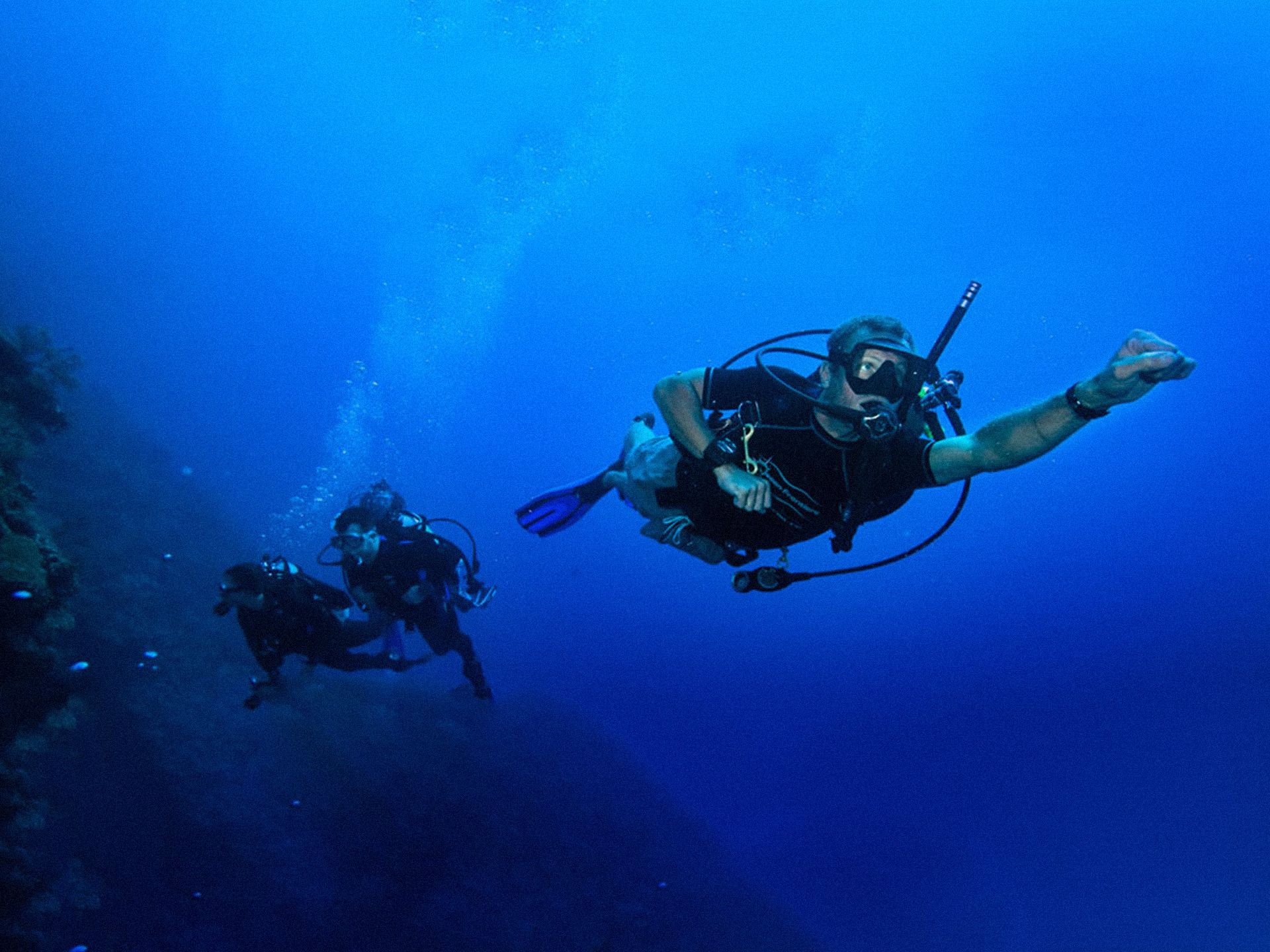
What sets Santorini apart isn’t just what lives in the water — it’s the terrain itself. The caldera plunges beyond 400 meters (1,200 feet) at its deepest points, a scale that’s hard to find anywhere else in the Mediterranean. Around it, divers can explore two underwater volcanoes, dramatic wall dives, volcanic reefs, lava caves, lava formations, four shipwrecks, and Posidonia seagrass meadows — often within the same short boat trip.
Even the seabed itself changes character from site to site: clear sand in some spots, black volcanic lava in others, and in places touched by the island’s mineral-rich hot springs, a seabed that shifts toward a deep, almost Mars-like red.
Why it matters
Few dive destinations offer this much range in one place — the marine life of a healthy Mediterranean reef, the geological drama of an active volcanic caldera, and a seabed that changes color depending on where the earth beneath you last erupted. It’s part of what makes diving in Santorini feel less like a single activity and more like exploring several completely different underwater worlds in one trip.